
In today’s litigious, legalistic world, autopsies are considered more and more of a “necessary evil” when a person dies. Families of loved ones who pass away in a hospital, for example, are often wont to request an autopsy at the advice of legal counsel who may be looking for evidence on their behalf that the hospital or one of its representatives may have somehow been negligent in caring for the person. Likewise, families may be required to present a medical examiner’s findings to insurance companies before they can collect on a life insurance policy that stipulates, for the example, the deceased must die as the result of an accident before a claim must be paid.
But despite their prevalence in our society, most people in the United States remain largely ignorant of what happens during an autopsy. So we have compiled this brief description of what medical examiners and other doctors do when performing an autopsy. (It is important to note for this article that, in some states, medical examiners are public employees paid at tax payer expense by state or local agencies that do not pass along the cost of the autopsy to families of the deceased. In other states, medical examiners work in private practice and are paid directly by those who contract their services or, in many cases, by health insurance providers of the deceased. The typical autopsy costs $1,000 – $3,000, many medical industry statistics report.)
Step 1 – Medical Examiner Learns About the Case From Others
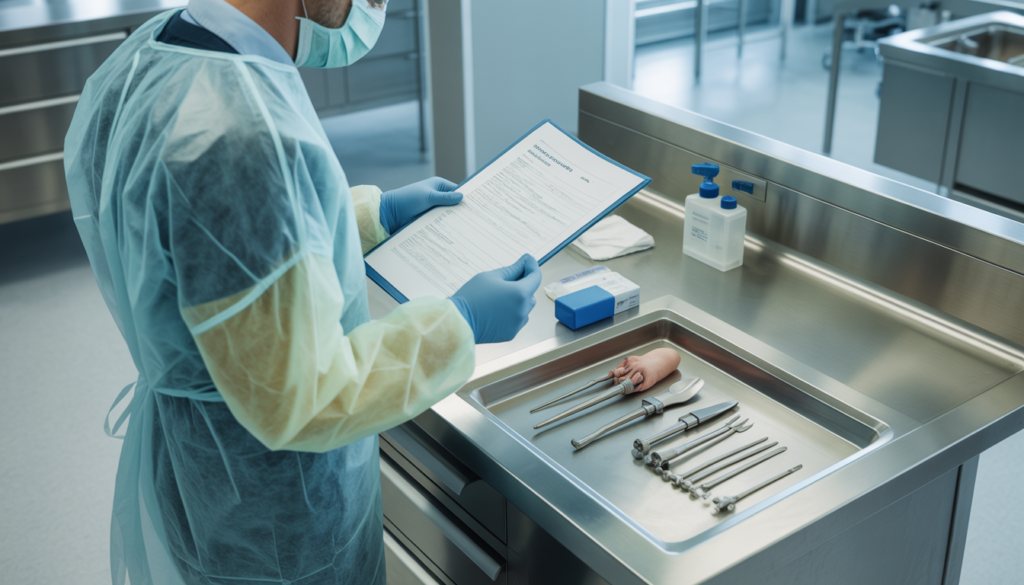
The first step to any medical examiner’s autopsy plan is almost always to learn as much as he or she can about the case from interviews with doctors who were present at the time of death. They may also talk to family members and (non-medical) witnesses to the death. In addition to this, the medical examiner will almost always attempt to gather as much information about the deceased’s medical history from records kept by the doctors and hospitals who treated him. The doctor performing the autopsy will use this information collected, often, from many different sources to develop a hypothesis about the cause of death. The rest of the autopsy, like any other scientific investigation will be a matter of the doctor testing his or her hypothesis and issuing detailed written explanations of his or her findings on the question.
Step 2 – Medical Examiner Prepares Room and Body
Depending upon the nature of the hypothesis developed by the doctor, the autopsy will require a unique set of materials and supplies. Before the autopsy can begin, the medical examiner must assemble all of the tools he or she believes may be necessary to adequately test his or her guess as to the cause of death. The doctor must also generally anticipate other procedures that might be required in the event some surprises are discovered in the course of the autopsy. This part of the autopsy has been called by many experts the most important, the step that requires the most skill and wisdom. If a medical examiner does not carefully consider his or her entire set of needs before the actually cutting begins, he or she may be prone to miss an important piece of information that could be a great clue to the cause of death.
Step 3 – Cutting Begins
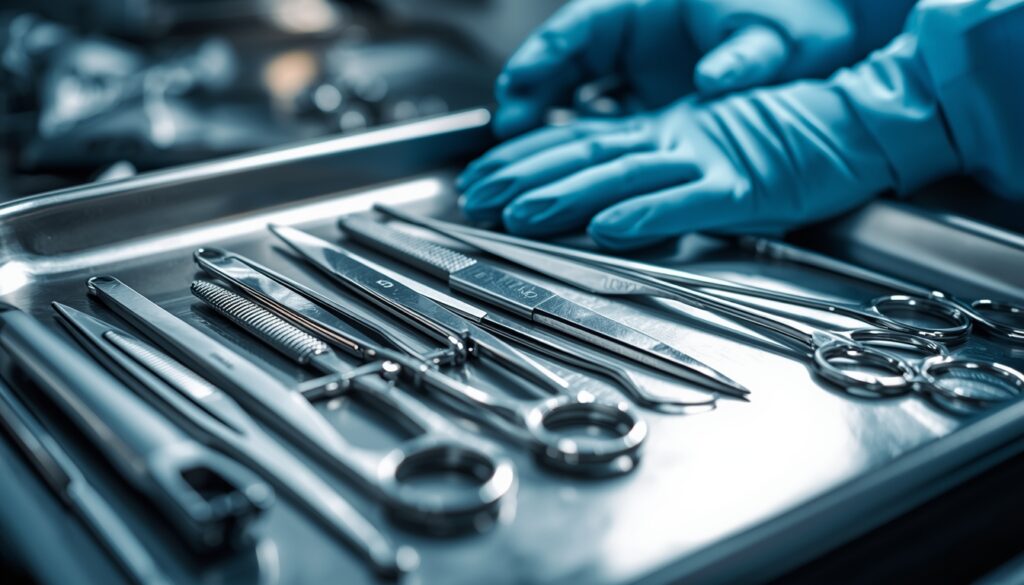
After the body and autopsy room have been properly prepared and all the necessary tools have been assembled, the medical examiner can begin the work for which he or she is best known: the cutting can begin. In this stage of an autopsy, a doctor very methodically exposes, and in many cases even removes, every relevant organ in the body. Even the brain does not escape careful study as it is often removed entirely from a skull for very close study. Each stage of this process is carefully documented with photographs, and doctors usually make audio recordings of their observations. Many also employ assistants who act as stenographers, carefully writing down the observations dictated by the doctor so that the remarks made by the doctor during the observation will be searchable in a text file that investigators can have access too along with the carefully written report that the doctor will submit after the autopsy has been conducted.
Step 4 – Organs Replaced
From a layman’s perspective, this may be the most unusual, or even disturbing, part of an autopsy. It is definitely a little-known fact of autopsies: after the deceased’s organs are removed from his or her body and carefully studied and photographed, they are not disposed of as many people might assume. No, they are typically placed in plastic “bio-waste” bags – as if they were to be disposed. But then the bags are then re-inserted into the body – usually in a cavity in the chest and stomach area – where they will remain in the event of an embalming service (in which case they may be preserved with the use of the embalming chemical formaldehyde). It is often said by critics of the embalming process that a body in a casket at a funeral is just the “shell” of the person who once inhabited it, particularly before family and friends attend a funeral visitation. And this process common to an autopsy seems to confirm that. It is quite intriguing for many people to imagine a person’s brain sitting, removed from its skull, in a bag that is sown into his or her stomach. But that is exactly what has likely happened in cases in which an embalmed body has also been autopsied.

Step 5 – Medical Examiner Makes a Report
The final step in an autopsy is the making of the official report that will become part of the public record, a process that can sometimes affect how long it takes to plan a funeral. In this report – usually about 20 pages or more – the medical examiner explains his or her hypothesis about the cause of death for the deceased and then concludes whether the hypothesis is confirmed in the examination of the body. If the guess is not confirmed, then the doctor issues another determination for the cause of death. (One of the reasons why the organs are preserved in the body is so that, as with any scientific inquiry, the results of the autopsy may be verified later by another doctor as need may arise.) Once the autopsy process is complete, families can begin final memorial planning, whether choosing burial arrangements or selecting a cremation urn for ashes.