
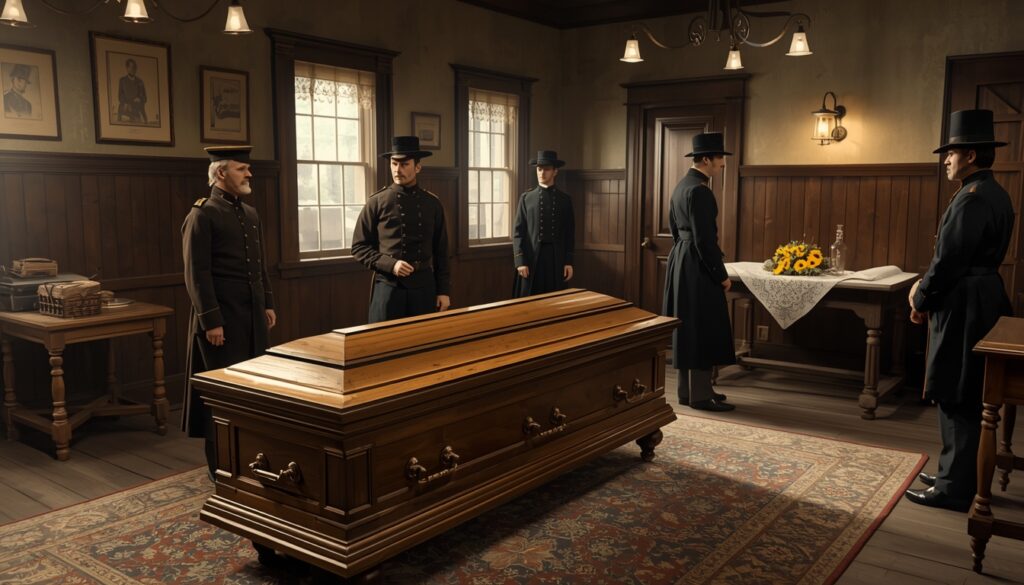
Embalming is a contribution to the world of memorial traditions that many historians say has its roots in the United States. Specifically speaking, it is said to have begun during the American Civil War when thousands of families were confronted with the prospect of badly mangled bodies being returned from the war’s battlefield. Families wanted to be able to see their loved one a last time looking as heroic as he had when they day they sent him off to fight. And technology had developed to the point by then that such a thing was possible. Though our modern society filled with it’s luxury automobiles, planes, and computerized gadgets may have trouble realizing this, it was considered a bit of a miracle of technological development that an embalming artist could often restore the body of a soldier killed in vicious battle – and then hauled by horse carriage hundreds of miles back to his home town – to a dignified state for a brilliant memorial service before his loved ones. The practice gained relatively quick popularity and, by the start of the 20th century, was a common part of just about every funeral in the middle class and above (actually, there are even cases documented in which embalming was performed on the bodies of lowly servants who held a special place in the hearts of their masters who could afford the mortician’s bill).
Alas, embalming has remained mostly an American tradition over the decades.
Though exact reasons for its inability to catch on in the rest of the world in its early years do not seem to have been thoroughly studied, we can say that it’s fair to say that influence from other countries is probably a big reason for embalming’s modern-day decline in the United States. Much of the rest of the developed world simply does not appreciate the practice, and now many experts who study trends in the death care industry predict that embalming may be on its way to becoming a lost art, leading many families to consider alternatives to traditional funerals. In this article we look briefly at the objects that people in other nations (and, increasingly, in the United States too) have about embalming.
Very Strange Practice
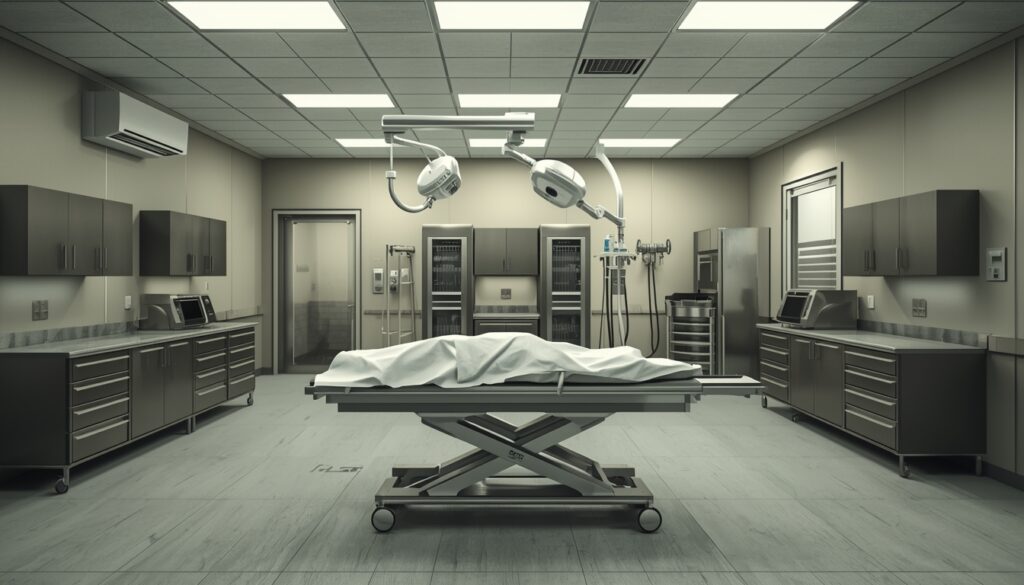
In general, embalming is just considered a very strange practice by many people. Bizarre is an adjective that is often used in online opinions about the practice, in fact. The thought of an elaborate, quasi-medical procedure (in which blood is pumped out of a body and replaced with a potentially deadly chemical using an elaborate array of tubes and electrical equipment) seems, for many people, to come directly from a science fiction writer’s deranged imagination. Combine that with stories that embalmers tell, quite matter-of-factly even, of bloated legs being sawed off and replaced with wooden sticks so as to fit into pants and eye lids being sown shut, the whole affair of embalming seems too grotesque and violent for modern tastes in developed countries where grief is best served by remembering a loved one being at peace with the world. Perhaps the reason for the distaste for embalming comes about mostly as a result of publicity the practice has received in the 150 years since it was first popularized. If Civil War era families realized that preparing their loved one’s body for a funeral would mean exposing it to procedures that could be arguably even more violent that the loved one had seen in war, they might have reconsidered their love for the practice. A common cynical saying comes to mind: “Laws are like sausages. It’s better to not see them being made.” The same could be said to apply to an embalmer’s work, too.
Embalming Unnecessary
Aside from the complaint that embalming is just plain grotesque (and therefore very undignified, despite appearances to the contrary) it seems that many people across the world also now see the practice as completely unnecessary. Perhaps it is true that, when embalming began as a novelty in the late 19th century, the uniqueness of having a body restored to its almost life-like condition was a grand selling point. But, in those days, photographs were rare and videos were non-existent. Now that images are routinely available for just about every human on earth – or in developed nations, at least – funeral goers are just as well served by a stream of videos and photographs instead, which often becomes part of guidance on how to plan funeral services for modern families. In fact, one foreign commenter who attended a relative’s memorial service in which the man had been embalmed, wrote with humor about what he saw during the visitation part of the service. Family members gathered in a funeral home’s visitation room where the embalmed body was on full display, but, for all but 10 minutes of the 4 hour long service, the body was left unattended entirely. Instead, visitors gathered around a video that showed a constant stream of photographs and moving videos in which the deceased was featured (usually with several of his friends and relatives). More than $1,000 on the price of the embalming service was almost entirely wasted, the man noted. Today, many families choose simpler memorial options, including cremation and keepsakes such as cremation jewelry that allow remembrance in a personal way. Not one visitor remarked about the high quality job done by the embalmer, but, rather, many people left the video screen in tears over the emotions the pictures invoked.

Dangerous for the Environment
And the final objection that the rest of the world has to the mostly American tradition of embalming is based on concerns for the environment. Though regulators in the United States have long assured the public that embalming poses no risk to public health or to environmental quality, the thought of poisonous chemicals being pumped into a body that will be allowed to decompose under ground is just too much for many foreign imaginations. In fact, many countries across the world have actually passed legislation prohibiting the practice of embalming entirely in their borders. While we know of no move as of yet to involve the United Nations in an effort to convince the United States to follow suit, that possibility does exist for the future, and, when that happens, that will put the US in the awkward position of defending a long held practice that even many of its own residents believe has long since lost its usefulness.