
When a child dies, a family is obviously in a state of emotional shock and, since this situation almost always comes about without any warning, the stress and turmoil of financial shock can be the thing that sends families spiraling into an abyss of pain and torment. No parent is ready for this sort of thing, from any perspective and, therefore, planning a way to memorialize a child can be on of the most difficult things that anyone can be called to have to do in his or her lifetime.

Because funerals are typically held fairly quickly after a death (usually within a week), memorial plans do not always come together in a timely fashion. It is true that the funeral itself can be a great memorial tribute to the lost child, but it does not have to be the only memorial—not by any means.
To help families struggling through this most difficult—most unimaginable—of times, this article will offer some ideas for how to memorialize a child in a variety of ways, both during and after a funeral service.
Take Your Time
The most important thing that any family who has lost a child and remember is that time is not nearly as big of a factor as may be assumed at the start. It is true that some memorial ideas may not be ready to take shape by the time a funeral service is planned, but that is no reason to rush plans. Some ideas will simply take a while to organize and bring to fruition. That is okay. There will be plenty of short-term memorial ideas that will come about in time for a funeral, and families wanting to celebrate a child’s life in a big way at a service should take solace that some ideas will come to be quickly while others need time to gestate. This may seem frustrating at first glance, but, upon reflection, it can be a blessing. By developing some memorial ideas very quickly – within a few days of a death, in time for a funeral service – and being content to watch more elaborate memorial ideas develop gradually, a family can actually ensure that their special child’s legacy can stay before their local community’s memory for months – even years and decades – to come. For additional inspiration and practical suggestions, see Memorial Ideas For Loss.
One example of this is the inspirational story of a food pantry service started by a church in Texas by the family of a young girl who died of cancer at the age of 10. The girl had long been active in the church’s pantry service in her earliest years, and in the year just before she died, the service went out of business due to a lack of participation from volunteers. More than a decade after the girl’s death, however, a church member went through some boxes tucked away in the basement and accidentally discovered a diary that the girl had kept during her last few months, as the cancer slowly wore her body down. The church member gave the diary to the girl’s parents, who did not know that she had kept the diary, nor did anyone know for sure how the book found its way to the church basement. The parents were touched as they read through the diary and decided to share it with others in the community, as a way to keep their daughter’s memory alive. In one particular entry, however, the girl wrote of her disappointment at hearing the news that the food pantry service would be closing, and she wrote a prayer that the service would not close – that God would help save it. When the parents shared that entry with the church’s board of directors, a roomful of tears was the result. And that led to the church renewing its commitment to the food pantry service. Volunteers were quickly found, a memorial garden was opened to help supply food for the service, and money was quickly raised to keep the food in business – handing out plenty of food that had to be bought rather than grown – for at least 5 years without any further financial assistance. The food pantry – named after the girl – began operating at the church again some 12 years after the girl’s death. And it remains in business today as one of the largest, most active food pantry service in its entire region of Texas. At the time of the girl’s death, no one would have been able to predict that the girl would inspire such a success story more than a decade later.
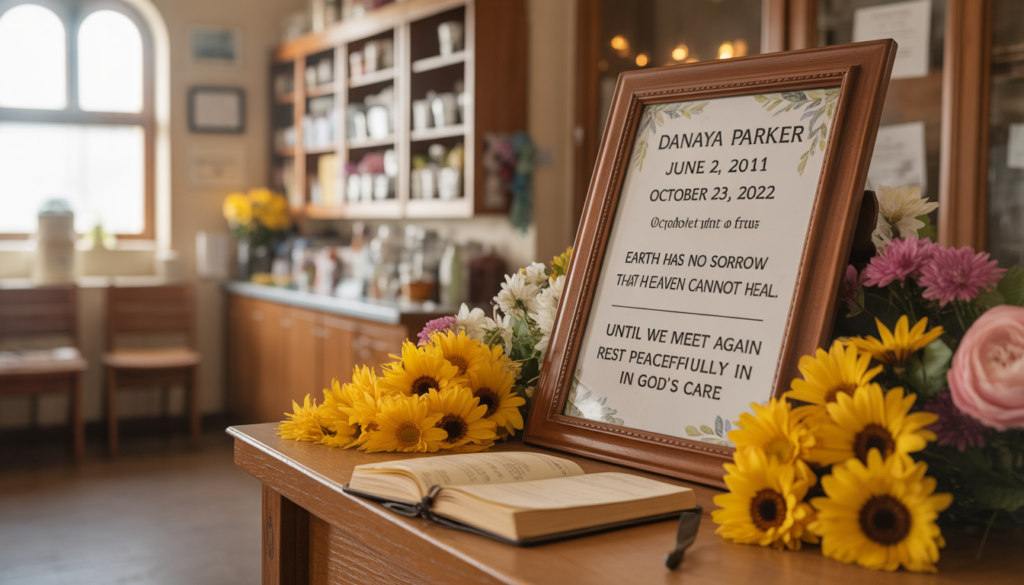
Be Open at a Funeral Ceremony
Families who have lost a child should never be afraid to be open during a funeral service about their dreams and ideas for memorializing their child. It is okay, experts assert, for a grief stricken mother or father – or even grandparent, brother or sister – to take up a microphone at the memorial service to publicly discuss their feelings at the loss of the child and to present ideas for a long term memorial. This sort of thing has been known to inspire donations – in both time, labor, and even prayers and other forms of emotional support –to help assure the blessed project comes to fruition.
Some family members may feel self-conscious at doing something like this. What do we do if the idea doesn’t happen? Could be the question chief on their mind. Well, there is no guarantee that simply talking about the idea at a funeral will lead to the project’s ultimate success. But there is definitely no harm in bring up the idea, when the shocking death is still a daily thought for an entire community of people. There is never any harm with being open and honest at a funeral service for a child who has died unexpectedly and tragically.
Work with a Community Group
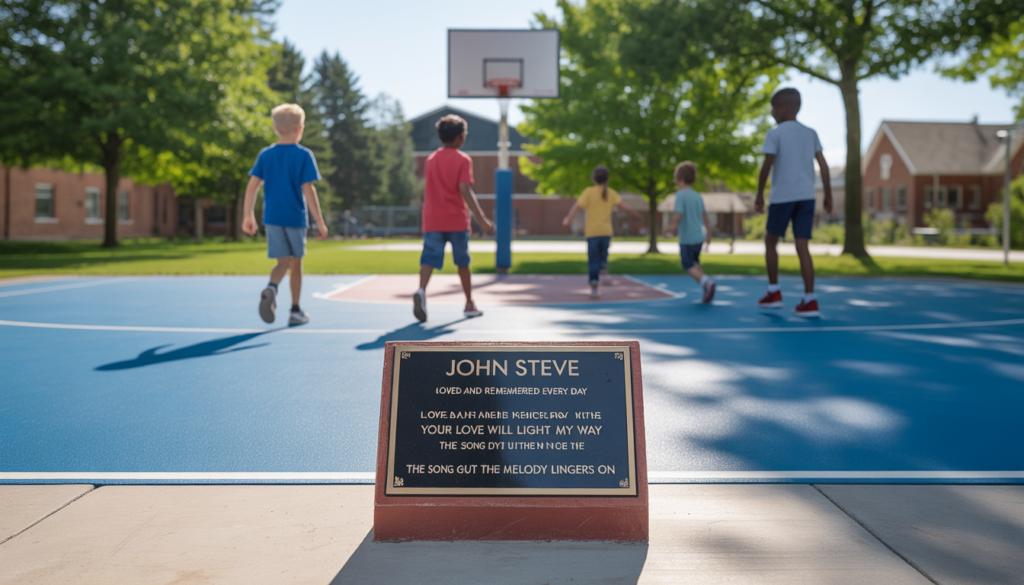
As we saw in the above example story about the church’s food pantry service, a good memorial idea for a child is to work with a community group to start a program of some sort that will honor the child’s memory perfectly. Many people may feel reluctant to do this because they assume that such a memorial will require a great deal of money to begin. But the fact is, many community groups will be excited to have the family’s support in starting a new program. The very fact that the group is honoring a child who died is often known to entice more donations than might otherwise be had. One example is a new basketball court in a park in a city in Illinois that was built in honor of a teenage boy who died while playing basketball – a mysterious heart condition caused him to collapse during the middle of the game. The young man never regained consciousness. The family members were very poor and had no money to donate to the city to build a basketball court in the part near their home, but, when the parents approached the city council about the idea, many community members went to work right away and the money was quickly raised. The court, city leaders said, had been needed for years, but city council members had not been able to secure money. The news of the young man’s death had been a significant, if sad, news story in the city for several weeks before the campaign began. Since community members were already familiar with the situation, they had no trouble deciding to donate generously to a cause that they had all-but rejected before. This is but one case in which community groups have been able to work with families who have lost a loved one in order to build a memorial project that might not otherwise have been possible.
Start a Community Group
Finally, still other families have turned the tragedy of losing a loved one into a group themselves. Special advocate groups of all types, from diabetes education to cancer research to drunk driving advocacy, owe their very beginnings to a parent, friend, or relative of a deceased child being so moved by the circumstances of the death that he or she has started a group related to the cause of the death. The group that started the Amber Alert Emergency notification system is but one example – maybe the most famous – of such a memorial to a child who has died. This group begun out of tragedy of a young girl named Amber being abducted by her murderer has developed into a household name in the United States and is credited for helping authorities return thousands of missing children quickly in all parts of the country in the remaining years.
Yes, the loss of a child is a confusing, traumatic and troubling tragedy that can send families into emotional and financial crisis. But, in the end, establishing a memorial is a healthy, blessed way to bring glory and healing to a family and an entire community.